A Saint Patrick’s Reflection: Ireland, Isolation, and Unexpected Grace
Saint Patrick’s Day is often filled with bright green flair, parades, shamrocks, and cheerful celebration, but beneath all that is a quieter, more tender story. It’s a story about loneliness, resilience, and a surprising kind of grace that grows in isolation. For those of us who live with disability, chronic illness, or limitations that set us apart from the busyness of the world, Patrick’s life can feel especially familiar, and hopeful.
For me, Saint Patrick’s Day has taken on an even more personal meaning over the years. I’m about a quarter Irish, but my husband is one hundred percent Irish descent, and that identity runs deep in him. His family comes from Cavan and Donegal, and Irish culture is not just something he celebrates once a year, it is something he carries every day.
We even gave our daughters Gaelic names. Nuala, pronounced New-La, means someone calm and even tempered. Aoife, pronounced EE-fa, was the name of Ireland’s most fearsome mythological woman warrior. And I have to say, her daddy picked exactly the right name for that child.
A Life Interrupted, Then Reimagined
Because of my disability, there are places I will never physically go. My vision loss is neurological, affecting my optic nerves, and my optic neurologist has warned that the altitude from air travel could risk a rupture or bleed. Flying is no longer an option for me.
So when my husband said he wanted to go to Ireland two years ago, we both knew I couldn’t go with him.
Still, I encouraged him to take our youngest, Aoife. Our oldest, who has autism, stayed home with me. It was the right decision, but not an easy one.
Aoife had never been on a plane before. She had never been away from me before. And she was absolutely terrified.
And if I’m being honest, there was a part of me that was jealous. She was getting to visit a place I had always dreamed of seeing, and she would see it with eyes that could take in every shade of green, every sweeping hill, every crashing wave along the Donegal shoreline.
Seeing Through Someone Else’s Eyes
But something unexpected happened.
When she came home and began to describe her trip, it was as if she painted Ireland for me with her words. The lush green land, the rolling hills, the rugged beauty of Donegal’s coast, it all came alive in my imagination.
She fell in love with her daddy’s homeland, which is also her own.
And somehow, through her, I was able to experience it too.
That’s when I started to think about Saint Patrick in a new way.
Patrick in the Irish Hills
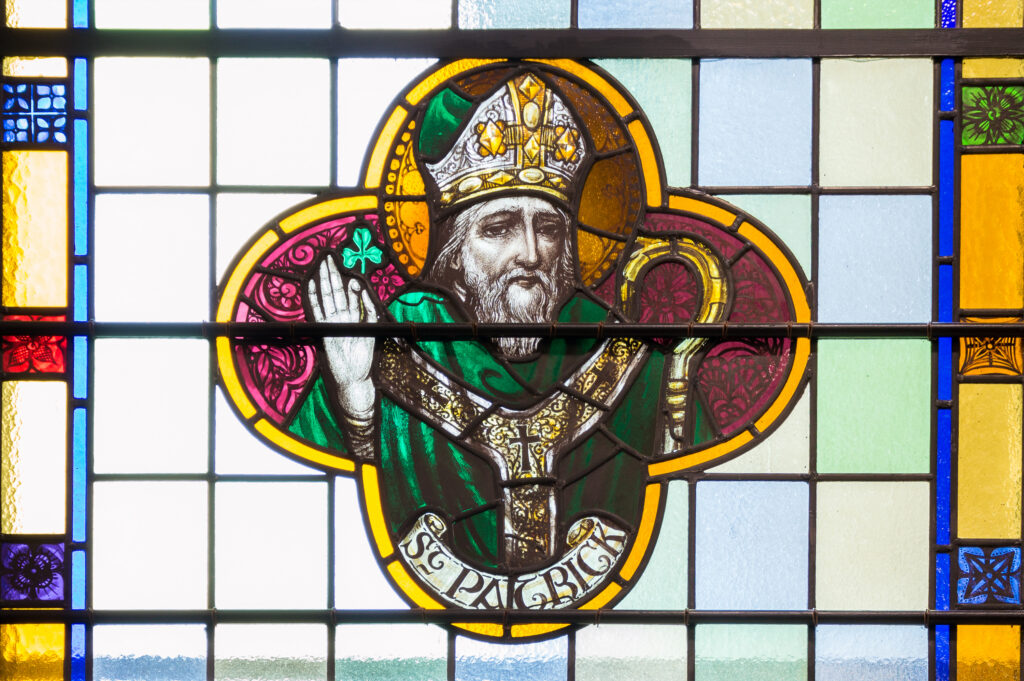
Patrick did not arrive in Ireland as a missionary. He arrived as a frightened teenager, kidnapped and forced into slavery, alone in a foreign land. He spent years tending sheep in the Irish countryside, surrounded by those same hills and fields my daughter had described.
He was isolated, cut off from everything familiar, living a life he never would have chosen.
And yet, it was there, in that quiet and isolation, that he came to know God.
He writes that he began to pray constantly, and over time, his faith deepened. What began as desperation became devotion. What began as loneliness became relationship.
For many of us living with disability, that resonates.
We know what it is to have life change in ways we didn’t choose. We know what it is to feel set apart, to live at a different pace, to sit in spaces that are quieter than we expected.
But Patrick’s story reminds us that God is not absent from those places.
When the World Gets Smaller, God Gets Closer
God often meets us most clearly in the stillness.
Patrick didn’t find God in grandeur. He found God in repetition, in silence, in the ordinary rhythm of long days spent watching sheep. Over time, that quiet became sacred.
I think about that when I think about my own life now. My world is smaller than it once was. There are things I cannot do, places I cannot go. There is grief in that, real and ongoing.
But there is also presence.
God has not withdrawn just because my life looks different. If anything, God feels closer in the stillness, more present in the quiet spaces where there is finally room to listen.
And sometimes, God even gives us glimpses of beauty through other people, through a daughter’s voice describing a distant shoreline, through the joy of someone else’s experience becoming, in some small way, our own.
From Isolation to Calling
Patrick eventually escaped and returned home. But his story didn’t end there.
He felt called back to Ireland, the very place of his suffering. And because of what had been formed in him during those years of isolation, he was able to return not as a captive, but as someone with purpose.
The place that once held his pain became the place of his calling.
That is a powerful reminder that the parts of our lives that feel limiting or broken are not wasted. They are shaping us in ways we may not yet fully understand.
More Than a Holiday
When you’re Irish, Saint Patrick’s Day isn’t just a gimmick. It’s a signal to pause and reflect, on the land, on the history, and on the saint who brought Christianity to a people and a place that still carry deep spiritual roots.
For our family, it’s about heritage. It’s about names that carry meaning. It’s about a little girl who boarded a plane in fear and came home with wonder. It’s about a husband whose love for his homeland runs deep.
And for me, it’s about seeing that even when I cannot go somewhere physically, God still finds ways to bring beauty, connection, and meaning into my life.
Saint Patrick’s story reminds us that isolation is not the end of the story.
Sometimes, it’s where the most important part begins.
A Prayer for Saint Patrick’s Day
Gracious God,
We thank you for the witness of Saint Patrick, whose faith grew even in hardship.
Help us remember that your presence remains with us in every circumstance.
Guide the Church to be a place of welcome, accessibility, and belonging for all people.
Give us courage to serve with compassion and to share your love in our communities.
Through Christ our Lord, Amen.