Praying for Inclusion
Scripture Reading: “There is one body and one Spirit—just as you were called to the one hope that belongs to your call—one Lord, one faith, one baptism, one God and Father of all, who is over all and through all and in all.” — Ephesians 4:4–6
When we talk about inclusion, it is easy to picture an open door — a welcome sign on the front lawn, a handshake at the entrance, or perhaps a cheerful “We’re glad you’re here!” And these are good things. But true inclusion goes deeper. It is not only about getting people into a space; it’s about ensuring that once they arrive, they know they belong, that their presence changes the community for the better, and that God’s love fully embraces every body.
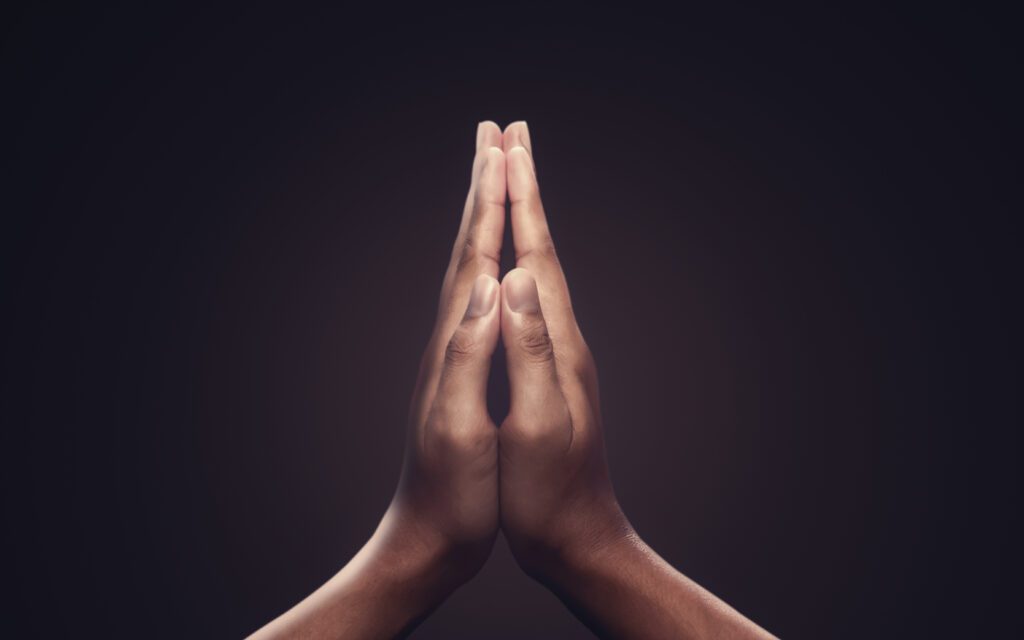
Inclusion is a prayer before it becomes a practice. Before we make changes to our buildings, before we adjust our worship services, before we rewrite our brochures or policies, we must begin by asking God to shape our hearts. Inclusion starts in the quiet space between our soul and the Lord, where we ask, “God, who have I overlooked? Whose voice have I failed to hear? How can I see my neighbor as You see them?”
When we pray for inclusion, we join in the work of the Holy Spirit, who breaks down dividing walls and unites what the world keeps separate. Jesus modeled this over and over — touching the untouchable, seeing the invisible, calling the excluded by name. He never treated someone’s disability, illness, poverty, or status as a reason to stay away. Instead, He made the margins the center.
But praying for inclusion also means being willing to be changed ourselves. Sometimes the barriers to inclusion aren’t the obvious ones — stairs without ramps, print without braille, sound systems without hearing loops. Often, the greatest barriers are in our assumptions: the quiet thought that “this person doesn’t need to be here” or “they wouldn’t get much out of this service” or “it’s too much trouble to adapt.” Prayer helps us confess these hidden thoughts and ask God to replace them with compassion, humility, and creativity.
A prayer for inclusion is both personal and communal. On our own, we can ask God to open our eyes to people we might unintentionally exclude. Together, as a church, we can pray for the wisdom and courage to make room — real room — for all God’s children.
Imagine what could happen if every church made inclusion part of its regular prayer life. What if Sunday intercessions always included prayers for accessibility? What if prayer groups lifted up the needs of those who cannot physically attend but still long to participate? What if vestry meetings and leadership retreats began with the question, “How are we making sure that everyone belongs?”
Inclusion is not an extra feature of the Gospel; it is at the heart of it. The Kingdom of God is not complete until every seat at the banquet table is filled — not just with those who can easily get there, but with those who have been carried, wheeled, guided, signed to, and sought out.
So let us pray without ceasing for inclusion, not as a vague hope but as a concrete reality in our communities. Let our prayers lead to action, our action lead to love, and our love bear witness to the truth that God’s family is as wide as God’s mercy.
Prayer:
Lord of all, You formed each of us in Your image and called us good. Forgive us when we overlook those You cherish, and when we fail to make room for the fullness of Your body. Open our eyes to see each neighbor as a reflection of You. Open our ears to hear the voices we’ve missed. Open our hands to serve without hesitation. Make our churches places where every BODY is welcome, every gift is honored, and every soul finds a home. In Jesus’ name, Amen.