
Taking Ash Wednesday Home: Making Ashes Accessible
When I was a little girl, we lived in a two-story house. My mother’s parents lived downstairs. My grandfather was legally blind, and my grandmother was not in good health.
Every Ash Wednesday, we would go to church and stand in line to receive our ashes. After the priest traced the cross on our foreheads, my mother would give my sister and me “the look” — a raised eyebrow and a small nod.
That meant: get back in line.
Around the pews, I would go for a second dose of ash, which greatly confused the priest. But the reason was simple. When we got home, my mother would run her finger across our foreheads and then trace the cross onto my grandparents’ foreheads.
We were bringing the ashes to them.
It wasn’t official. It wasn’t announced. But it was holy.
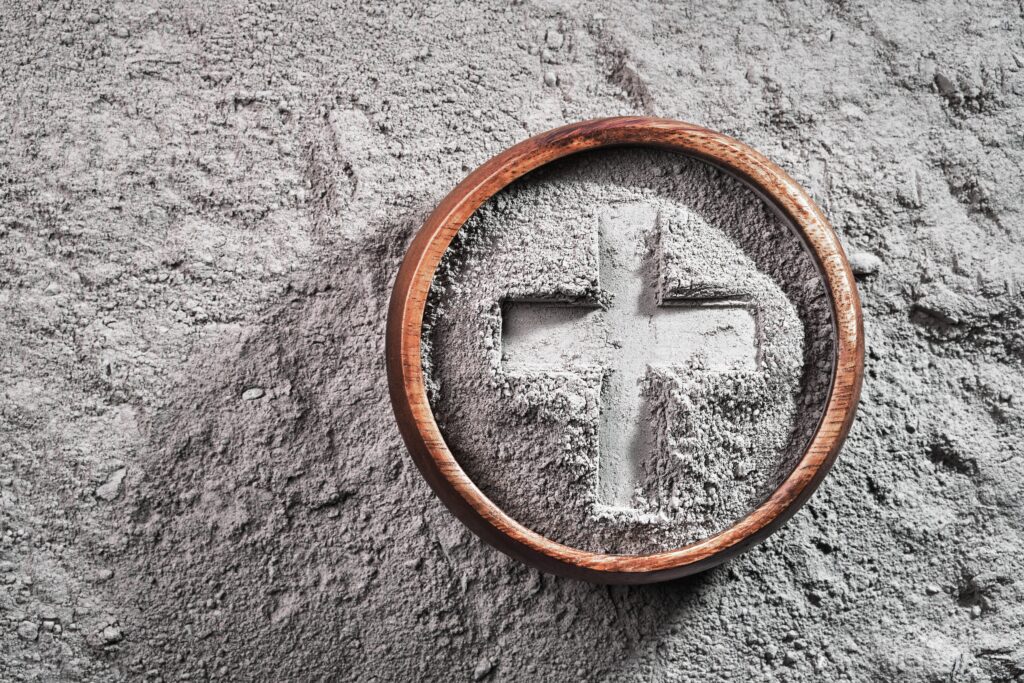
Years later, during COVID, many parishes rediscovered what my mother already knew: ashes can travel. To-go kits appeared. Drive-through imposition became common. Ashes were mailed or delivered.
For many disabled Episcopalians, that wasn’t convenience; it was access.
Now that most parishes have returned to “normal,” many have quietly stopped offering take-home options. But disability was never temporary. Winter weather still exists. Chronic illness still exists. Caregiving responsibilities still exist.
Ash Wednesday should be accessible to everyone.
And not only in their homes. If ashes can travel downstairs in a two-story house, they can travel into our communities as well.
Why To-Go Ashes Matter
Not everyone can navigate icy sidewalks in February. Not everyone can attend crowded services or sit, stand, and kneel through a full liturgy. Some cannot leave home due to illness. Others are caring for medically complex children or aging parents. Some cannot drive at night. Many live with chronic pain, fatigue, compromised immune systems, or sensory sensitivities that make a packed church overwhelming rather than prayerful. For some, attending an Ash Wednesday service would require days of recovery afterward. Absence is not a lack of devotion; it is often the reality of finite bodies.
And then there are those who are not at home, but at work. Hotel employees preparing rooms. Restaurant staff in the middle of a shift. Retail workers who cannot step away. First responders on call. Nurses, radiology technicians, infusion center staff, and hospital teams moving from patient to patient. Their schedules are not their own. The Church’s liturgical calendar does not pause their responsibilities.
If ashes can only be received inside a sanctuary at designated times, we unintentionally exclude people who are already carrying the weight of the world.
Ash Wednesday proclaims a universal truth: “Remember that you are dust.” That truth belongs to the immunocompromised patient receiving treatment. It belongs to the firefighter on duty. It belongs to the exhausted caregiver. It belongs to a college student in a dorm room. It belongs to the elderly resident in assisted living.
To-go ashes are not a diluted version of the liturgy. They are an expansion of pastoral care. They allow the Church to move toward people rather than waiting for them to come to the Church. They embody what we say we believe: God can meet you anywhere.
When ashes travel, the Church remembers who it is.
Naming the Invitation
To-go ashes must be visible and normalized. Parishes can offer them after the liturgy, make them available in the narthex, mail them to homebound parishioners, deliver them during Communion visits, provide drive-through ashes, or livestream the service with pauses for home imposition. Some may coordinate visits to workplaces and care facilities.
Most importantly, say it publicly: To-go ashes are available. Ashes will be brought into the community.
When you name it, you communicate that disabled participation is expected. not exceptional.
Why This Should Continue
During COVID, the Church proved it could adapt. When barriers became obvious, creativity followed. Those barriers never disappeared for disabled people.
Ash Wednesday reminds us that we are dust — fragile, finite, human.
It also reminds us that we are beloved.
Beloved not only when we can climb the steps.
Not only when we can sit through the service.
Not only when our bodies cooperate.
Beloved in our homes. In hospital rooms. In assisted living facilities. In hotel kitchens and restaurant back rooms. At fire stations and infusion centers. On college campuses. Downstairs in a two-story house.
I still think about that confused priest as I stepped forward for a second imposition.
He didn’t know how important my ashes really were to my family.
Now we have the chance to make that movement intentional.
We can plan for the ashes to travel.
Because mercy should never be limited by architecture.
And grace — like ashes — is meant to be carried.