
Florence Nightingale: The Devout Anglican Who Revolutionized Nursing and Social Care
Florence Nightingale is remembered as the “Lady with the Lamp,” gliding through dark hospital corridors to comfort wounded soldiers. But her light didn’t just brighten the wards—it reshaped the world. A devout Anglican, Florence revolutionized nursing and public health, proving that compassion, discipline, and faith can drive social change. Her legacy still calls us to build communities rooted in dignity, justice, and care for all—especially those society overlooks.
A Calling That Defied Expectations
Born in 1820 to a wealthy English family, Florence grew up with every privilege—and every expectation to marry well and live quietly. But at sixteen, she felt God call her to a different path. She wrote in her diary that “God spoke to me and called me to His service,” and from that moment, she knew her life would be devoted to something bigger than herself.
That decision was radical. Nursing at the time had a horrible reputation. Hospitals were dirty, chaotic, and often staffed by untrained workers or disabled veterans considered unfit for other jobs. For a woman of Florence’s class, choosing this path was almost unthinkable. She faced resistance from her family, battled periods of illness, and often doubted her strength. Still, she pressed on—determined that every life was worth fighting for.
Building a New Kind of Care
Florence trained with Lutheran deaconesses in Germany, then returned to England to take charge of a struggling London hospital. She introduced fundamental but revolutionary changes: call bells so nurses could respond quickly, clean bedding, organized food delivery, and rigorous hygiene standards.
The impact was immediate. Mortality rates plummeted, and the reputation of nursing began to shift. Florence proved that good care wasn’t about social status—it was about skill, dedication, and a fierce respect for human dignity.
The Lady With the Lamp
Her defining moment came during the Crimean War (1853–1856). When reports of appalling conditions in military hospitals surfaced, Florence was asked to lead a team of nurses to the front. What she found was staggering neglect: filthy wards, scarce supplies, contaminated water, and soldiers dying from infection more than battle wounds.
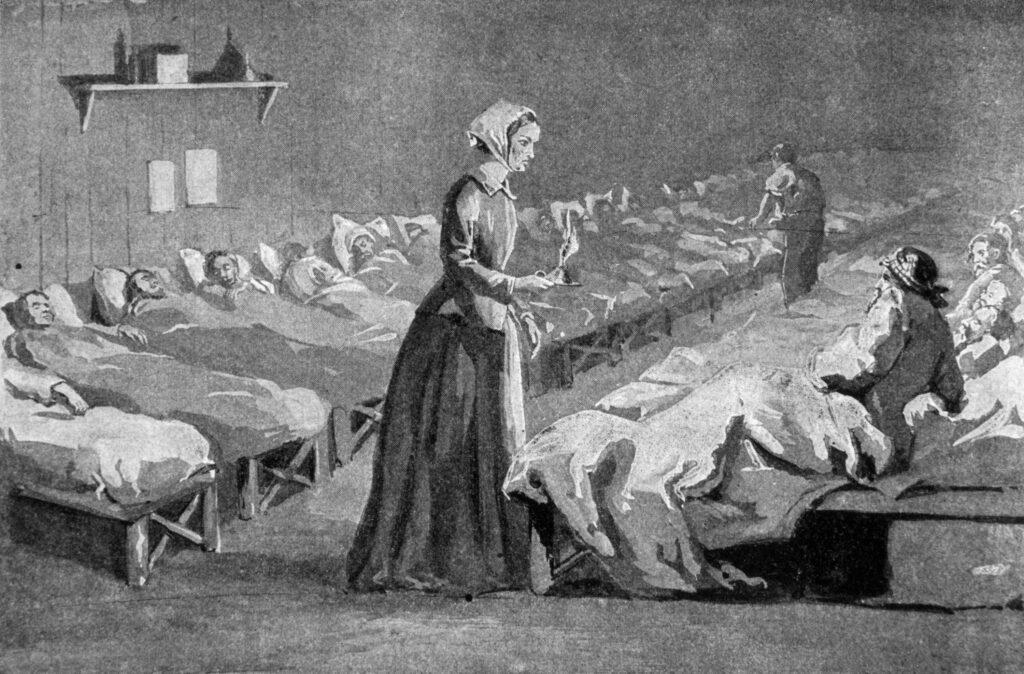
She demanded sanitation systems, clean water, fresh linens, and proper ventilation. Death rates fell dramatically. She also tended to the soldiers’ hearts—writing letters for them, organizing reading rooms, and offering spiritual care. At night, she would walk the wards with a dim lamp, checking each patient personally. That image earned her the enduring name “The Lady with the Lamp,” but her true brilliance was not in symbolism—it was in the quiet, relentless work of saving lives.
Faith in Action
Florence’s work wasn’t just humanitarian; it was deeply spiritual. She wrestled with theological questions yet remained anchored in her Anglican faith. Prayer was part of her daily rhythm, and she urged nurses to see their work as sacred. To her, healing meant tending body, mind, and soul.
Her faith also motivated her to engage in public health advocacy. She recognized that illness often stemmed from poverty, poor housing, and a lack of education. After the war, she used her reputation—and her groundbreaking statistical research—to campaign for sanitation reforms, clean water systems, and safer urban housing.
Even when illness confined her to bed later in life, she continued to write, strategize, and mentor from afar. She believed God’s call didn’t end when the body faltered. In that way, she embodied a truth people with disabilities know well: our worth is never measured by productivity or physical strength, but by the image of God within us.
Carrying the Lamp Today
Florence Nightingale’s legacy reaches far beyond the history books. She showed the world that caregiving is not just technical—it’s holy. She reframed nursing as a profession of skill and compassion, demonstrating that faith can be a powerful force for sweeping social change.
That same calling belongs to us. The church is meant to be a place where everyone—especially those living with disability—finds belonging, dignity, and purpose. Yet too often, barriers remain: inaccessible buildings, sensory-overloading worship services, leadership structures that overlook disabled voices.
Honoring Florence’s legacy means refusing to accept the status quo. It means listening closely to the lived experiences of people with disabilities. It means creating worship spaces that welcome diverse bodies and minds. It means ensuring leadership tables reflect the fullness of God’s people.
Most of all, it means remembering that inclusion is not charity. It’s Gospel. Every person carries gifts intended to bless the community. When we overlook them, we all lose out.
A Call to Shine
Florence carried her lamp into places others feared to go—and changed the world. We are invited to do the same.
Start small: ask who’s missing from your pews, your committees, your choir. Learn about disability justice. Make room at the table. Celebrate the gifts and voices of people who have been marginalized.
This is how we carry her light: not just by remembering her story, but by living it.
So, what do you say—will you join me?