More Than a Flag: What the Disability Pride Flag Can Teach the Church
Spend enough time in Episcopal churches, and you begin to notice the flags.
Many of our churches display the Episcopal Church flag and the American flag in the nave. Historic parishes often have others as well. My own parish, a church that has stood for more than 300 years, displays both the flag of the Thirteen Colonies and the Union Jack, reminders of its long and faithful history.
Outside our churches, many congregations proudly fly the Pride flag in June, and some keep it flying year-round as a visible sign that LGBTQIA+ people are welcomed and loved. These flags tell visitors something about who we are before anyone says, “Good morning,” or hands them a bulletin.
As I visit Episcopal churches throughout my diocese, I often find myself wondering what it would be like to see another flag among them—the Disability Pride flag.
Not because every church needs another banner to hang, but because every symbol we choose to display tells a story about who belongs.
A Community We Don’t Always See
Nearly one in four adults in the United States lives with a disability. That means disability is already present in every congregation, whether we recognize it or not. It is the child with autism sitting quietly in the pews, the parishioner with chronic pain who comes despite discomfort, the veteran living with PTSD, the older adult with hearing loss, the person managing depression, the guide dog user, the choir member with low vision, and countless others whose disabilities may never be visible to us.
Disability is not a separate ministry. It is part of the Church because disabled people are part of the Body of Christ.
The Meaning Behind the Disability Pride Flag
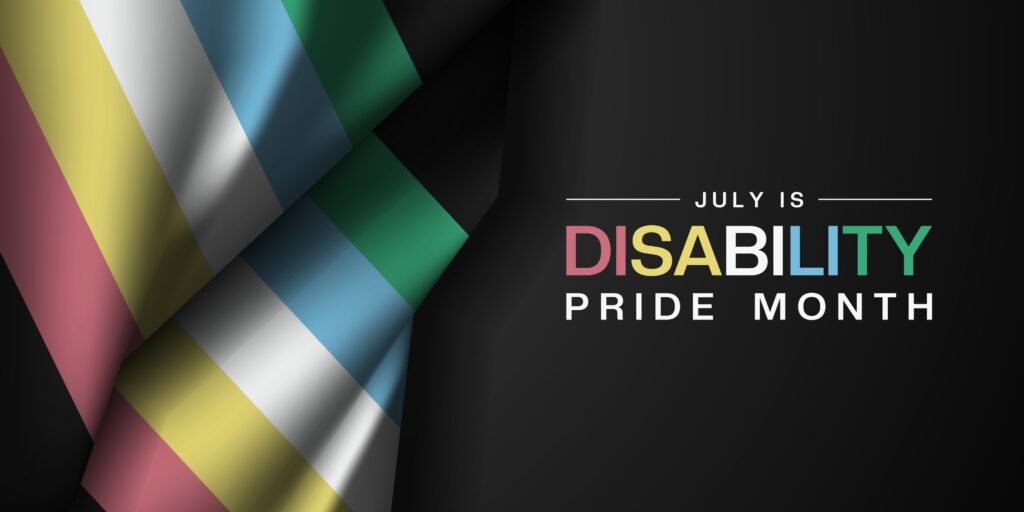
The Disability Pride flag was redesigned by disabled artist Ann Magill after receiving input from people across the disability community. Every part of the design has meaning.
The charcoal background remembers the lives of disabled people who have experienced discrimination, exclusion, institutionalization, violence, and the many ways society has failed to recognize their dignity.
The diagonal bands cutting across the flag symbolize creativity, movement, and the ways disabled people continue to adapt and navigate a world that is not always built with them in mind.
The colors represent the beautiful diversity of the disability community.
- Red represents physical disabilities and mobility impairments
- Gold represents neurodiversity, including autism, ADHD, dyslexia, and other neurological differences.
- White represents invisible and undiagnosed disabilities.
- Blue represents psychiatric and mental health disabilities.
- Green represents sensory disabilities, including blindness, low vision, Deafness, hard of hearing, and sensory processing differences.
Together, these colors remind us that there is no single disability experience. Every person has a unique story, and every story reflects the image of God.
Why This Matters for the Church
As Episcopalians, we understand that symbols matter. Crosses, stained glass, banners, vestments, and even the colors of the liturgical seasons teach us something about our faith. They proclaim truths before a sermon is ever preached.
The Disability Pride flag can do the same.
It quietly tells disabled people, “We see you. You belong here. Your gifts matter.”
That message is especially important because so many disabled people have spent years wondering whether the Church truly sees them beyond their disability.
More Than a Flag
Of course, displaying a Disability Pride flag does not make a church accessible. Accessible entrances, large-print bulletins, captions, hearing assistance, audio description, accessible websites, and welcoming attitudes all matter far more than any piece of fabric.
But symbols often begin conversations, and conversations lead to change.
Perhaps that is why I keep imagining the Disability Pride flag flying beside the other flags outside our churches. It would not erase our history or replace the symbols we already cherish. Instead, it would simply proclaim another Gospel truth—that disabled people are not guests in the Church.
We are the Church.
And that is a story worth telling.