More Than a Symbol: Autism, Neurodiversity, and Who Gets to Decide
Symbols are powerful things. They show up everywhere! You can find them on T-shirts, in church bulletins, on social media posts, and in awareness campaigns. Each symbol tries to say something meaningful in a single image. They help us build identity, create a sense of belonging, and sometimes even explain how we understand the world. But when it comes to autism, symbols have never been simple, and the more we talk about them, the more we realize they carry different meanings depending on who you ask.
The Puzzle Piece: Where It Began
The puzzle piece is probably the most recognizable symbol connected to autism. It first appeared in 1963, when the National Autistic Society in the UK used it to represent autism as something “puzzling,” something people didn’t fully understand yet. Over time, that image changed. The original version included a crying child, but that disappeared. Bright colors were added. Eventually, it became a ribbon, a logo, and something many people came to associate with autism awareness.
For a long time, it was used with good intentions. It was meant to reflect complexity, maybe even hope. But symbols don’t stay the same forever. They grow and shift, and sometimes they start to carry meanings that weren’t part of the original idea.
When Meaning Changes
As more autistic voices began to be heard, especially in the early 2000s, people started to push back on the puzzle piece. Not because they didn’t understand where it came from, but because of how it felt.
For some, it started to suggest something was missing. Something incomplete. Something that needed to be fixed.
And for many autistic individuals, that just didn’t sit right. Autism wasn’t something to solve. It wasn’t something broken. It was part of who they are.
The Rise of New Symbols
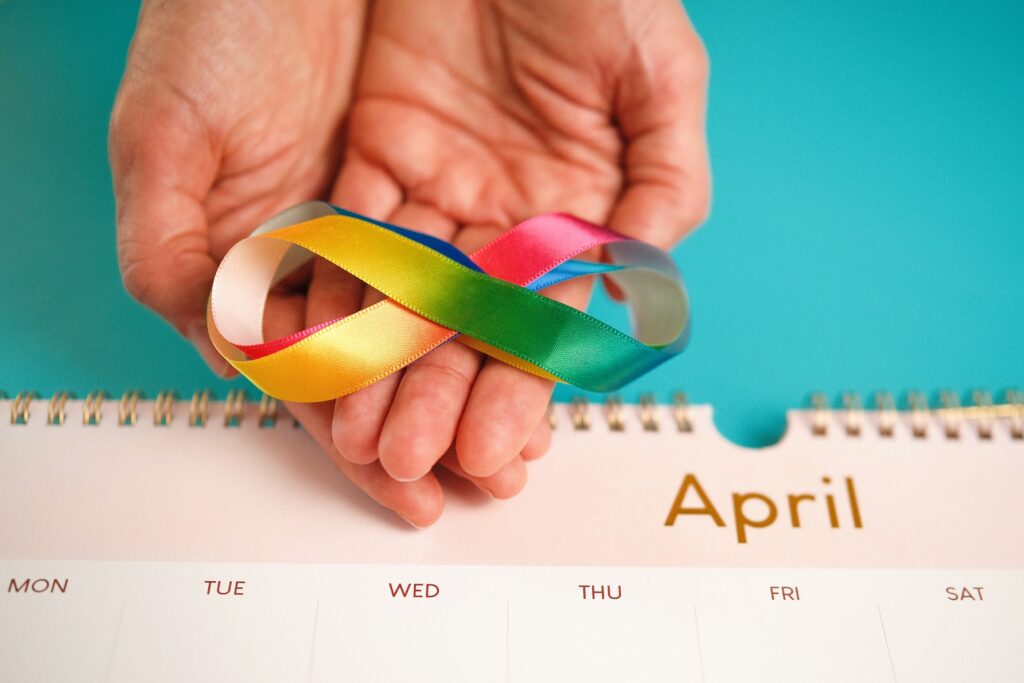
As that conversation grew, new symbols began to emerge. The infinity symbol, often shown in rainbow colors, became one of the most recognized alternatives. It comes from the neurodiversity movement and reflects the idea that there are endless ways of thinking, being, and experiencing the world.
Instead of focusing on fixing, it focuses on valuing.
The colors represent the wide diversity within the autism spectrum, because autism doesn’t look the same for everyone. There’s also a gold infinity symbol, drawn from the chemical symbol “Au,” as a quiet way of saying autism has value. And even beyond that, some people use butterflies to represent growth and change.
Each of these symbols is trying to tell a story. And each one tells it a little differently.
But Here’s Where It Gets Complicated
It would be easy to land here and say one symbol is better than another. That one is correct, and the other is outdated.
But it’s not that simple.
Because symbols don’t just belong to organizations or movements.
They belong to people.
And people experience them in deeply personal ways.
My Daughter and the Puzzle Piece
My 13-year-old daughter is autistic, and she likes the puzzle piece.
Not because she feels like something is missing. Not because she sees herself as incomplete. But because it helps her explain something that feels very real to her.
She doesn’t always feel like she fits.
Not because she’s lacking anything, but because the spaces around her aren’t always built with her in mind. And that’s a very different kind of “puzzle.”
It’s not about being broken.
It’s about belonging.
So when she sees the puzzle piece, she doesn’t see something negative. She sees something honest.
Who Gets to Choose?
That’s why I think we need to slow down when we talk about this. It’s easy to get caught up in trying to choose the “right” symbol—the one that feels most respectful or most current.
But no one symbol speaks for everyone.
And more importantly, the only people who get to decide what these symbols mean are the people living the experience.
The history matters.
The critiques matter.
The shift toward neurodiversity matters.
But so does lived experience.
So does personal connection.
So does someone saying, “This is what fits for me.”
Moving Beyond Awareness
We’ve spent a long time talking about awareness. And awareness matters. But it’s not the whole story.
What we’re really being invited into now is something deeper.
Understanding.
Acceptance.
Listening.
Listening when someone says, “That symbol doesn’t represent me.”
And also listening when someone says, “This one does.”
Even when those answers don’t match.
Final Thought
I think about my daughter when these conversations come up. The way she sees the world. The way she understands people. The way she sometimes stands just slightly outside the circle; not because she doesn’t belong, but because the circle wasn’t drawn with her in mind.
And I find myself wondering if maybe we’ve been asking the wrong question all along.
Not “Which symbol is right?”
But “Are we creating spaces where people don’t have to explain themselves in the first place?”
Because when someone is truly seen, truly known, truly welcomed… the symbol becomes secondary.
What matters is that they don’t have to shrink, adjust, or translate who they are just to belong.
And maybe that’s the work in front of us.
To build communities, especially in our churches, where that kind of belonging is real.
Where it isn’t assumed, but practiced.
Where it isn’t stated, but lived.
Because at the end of the day, this isn’t just about symbols.
It’s about whether we actually mean it when we say:
Every Body Welcome.
Every Body Sacred.